IVF & Fertility Specialist | Kharadi, Pune
Your Journey to
Parenthood Begins Here
Expert Fertility & Gynaecology Care with
Compassion and Advanced Science
MBBS | DNB (Obstetrics & Gynaecology) | DGO | MNAMS | Advanced Diploma in ARTS
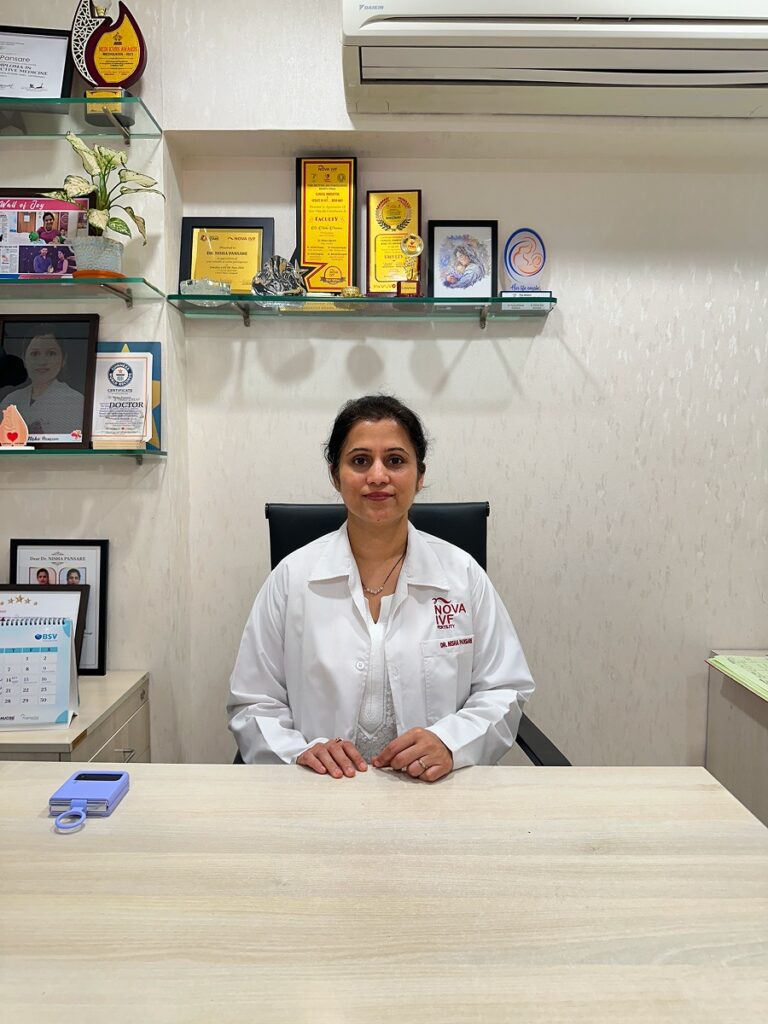
Meet Dr. Nisha Pansare
Dr. Nisha Pansare – Your Trusted Fertility & IVF Specialist in kharadi, Pune
Dr. Nisha Pansare is a highly experienced and compassionate Fertility Specialist, Gynecologist, and Obstetrician based in Pune, with over 13 years of dedicated practice. She holds an MBBS from Government Medical College, Miraj, and postgraduate credentials including DGO, DNB (Obstetrics & Gynecology), MNAMS, and Advanced Diploma in ARTS.
She has been associated with reputed institutions like Deenanath Mangeshkar Hospital, Indira IVF, Nova IVF Fertility, and currently practices at Nova IVF Fertility Center, Kharadi. Dr. Pansare has successfully treated complex fertility cases, and is known for combining evidence-based medicine with genuine care.
Consultation Hours: Tue, Thu, Fri — 1:00 pm to 3:00 pm
- IVF Treatment
- ICSI Treatment
- Ovulation Induction & IUI
- PCOS/PCOD Treatment
- Advanced Laparoscopic Gynaecology
- Natural Cycle IVF
- Pregnancy & Postnatal Care
- Male Infertility Solutions
- Fertility Counselling
- Embryo Donor Program
- Hysteroscopy & Endoscopy

Why Choose
Dr. Nisha Pansare?
- 13+ Years of Specialized Experience in Fertility & IVF
- Advanced Diploma in ARTS
- Successfully Treated Hundreds of Complex Fertility Cases
- Empathetic, Personalized Care Approach
- Access to World-Class IVF Labs & Technologies in Kharadi, Pune.
- Member of ISAR, MCI, POGS & MNAMS
outstanding success rates
Over 21,000 babies born and counting
Live birth rate for PGS treatment
all ages average
Live birth rates for IVF/IMSI/ICSI/PIMSI treatment
all ages average
Live birth rates for egg recipient treatment
Our services
Consultation and testing
A fertility consultation is the first step in understanding and taking control of your fertility. At this appointment, you will meet with an RMA of NY fertility specialist to discuss your medical history and family-building goals.
IVF treatment
In Vitro Fertilization (IVF) is a fertility treatment where eggs are retrieved from a woman's ovaries and fertilized with sperm in a laboratory. The resulting embryos are then transferred to the uterus to achieve pregnancy. IVF is commonly used for individuals facing infertility or genetic issues.
Embryo screening
Procedure performed during IVF to assess embryos for genetic or chromosomal abnormalities. This helps identify healthy embryos for transfer, reducing the risk of genetic disorders and improving the chances of a successful pregnancy.
Eggs preservation
Egg freezing (oocyte cryopreservation), is a process where a woman's eggs are extracted, frozen, and stored for future use. This technique is commonly chosen to preserve fertility before medical treatments, like chemotherapy, or to delay pregnancy for personal or medical reasons.
Immune testing
Thorough immune testing for individuals and couples
To establish any issues that may be preventing a successful IVF treatment, we carry out a comprehensive series of tests which check different aspects of your immune system.
Egg & sperm freezing
Comprehensive fertility preservation services
Hope Restored. Lives Changed.
“Dr. Nisha guided us patiently through every step of the IVF journey. We are now proud parents, thanks to her care and expertise.”
“Her understanding of our concerns and deep knowledge really made a difference. She gave us hope when we had almost given up.”
Visit Dr. Nisha at Top Fertility Centres in Pune
Advanced Diploma in ARTS, trained at Deenanath Mangeshkar Hospital
egg donation
Give the gift of life
By becoming an Egg Donor with CRGH you can provide a truly life-changing gift. Egg donors are remarkable women; helping our patients achieve their dream of a family of their own when they otherwise may not have been able to.
Become an Egg Donor and do something incredible.
Take the First Step Towards Parenthood
Schedule your in-person or virtual consultation with Dr. Nisha Pansare.
Available: Monday - Saturday
11:00 AM – 1:00 PM, 6:00 PM – 9:00 PM
Nova IVF Fertility Center, Kharadi